Coastal Geology Laboratory

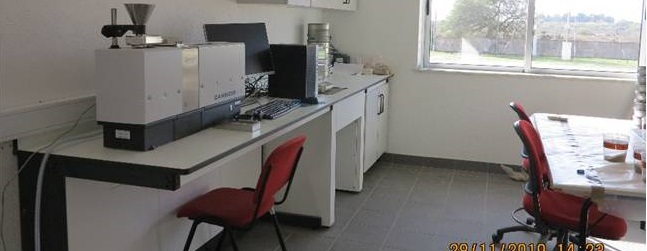
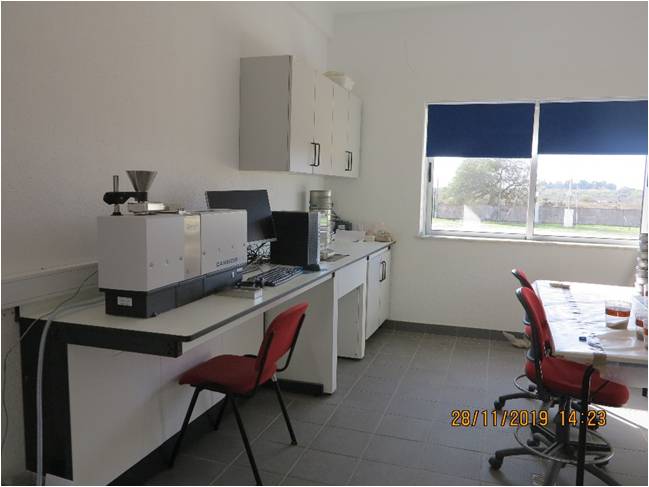
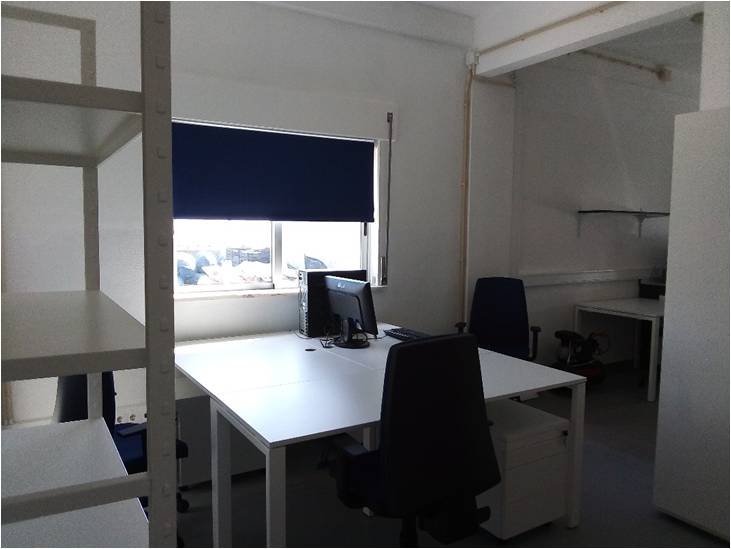
The Coastal Geology Laboratory comprises of two rooms, one for preparing samples and the second, for characterization and analysis of sediment samples.

Coastal Geology Laboratory

Gallery
INTRODUCTION

The Coastal Geology Laboratory seeks to integrate four core lines of research, these are, 1). the study of our coastline and to support coastal management efforts; 2). the study of Holocene paleoenvironments (the last 10,000 years) based on estuarine and marine cores;
3) collecting evidence of tsunamis in sedimentary records from the continental shelf; 4). improve seabed mapping of the Portuguese sea floor using multibeam bathymetry and acoustic backscatter data.
To achieve these goals, the Tavira Unit has two rooms dedicated for laboratory use, and are equipped with instruments that permit the sedimentological characterization and analysis of marine and coastal sediments.
The Micro Raman is an exciting piece of equipment that permits the chemical characterization of any material without destroying the sample. The spectral data generated from these microsamples gives geologists a mineralogical fingerprint and this data can be compared to a database to determine the provenance of the sample/sediment. The Camsizer, on the other hand, analyzes a particle’s size and shape and is also used in determining the source or provenance of sediments. The samples can be manually checked by using the binocular available in the lab. In addition, the lab houses a Malvern Mastersizer 3000 that determines grain sizes by laser diffractometry, and a Calcimeter Eijekelkamp – that determines the carbonate content.
The other equipment available is for the preparation of sediments for analysis. The sediment distributor (Retsch PT 100) performs a random, and representative division of sediment samples, while the sediment mill (Retsch PM 100) performs the grinding of sediments for analysis of carbonates and organic matter.

Equipment List

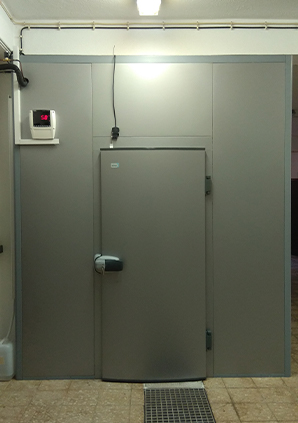
Cold Chamber
The Cold Chamber is a cold room archive where different types of sediment samples collected over time, are stored.
The main goal of the Cold Chamber is to ensure that collected samples are stored under perfect conditions (~4ºC), even if it is temporarily, enabling their use in future analyses.
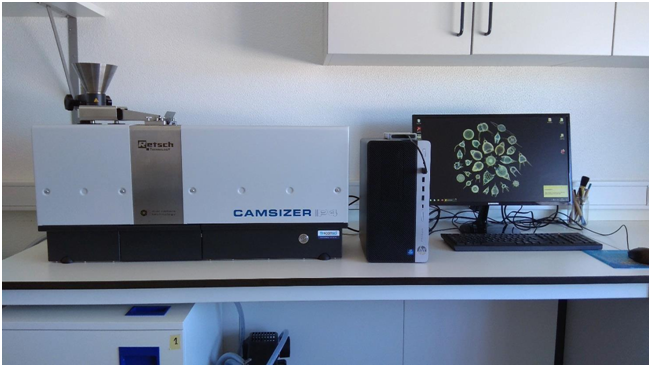
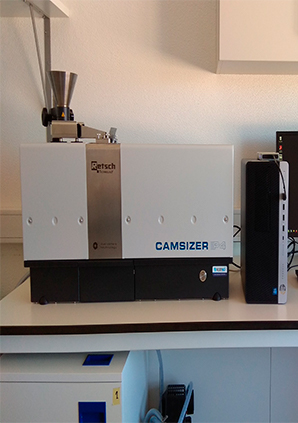
Retsch CAMSIZER P4
This system allows a fast and accurate measurement of size distributions, shape, number and density of particles, for fine and coarse sediments, with sizes that can vary between 20 µm and 30 mm, without the need for adjustments. This also allows correlation to existing data from other diverse techniques such as sieving, microscopy, and hand calliper measurement.
It has a patented design as it is the only a particle analyser that uses two cameras in the same measurement while maintaining accuracy and sensitivity throughout.
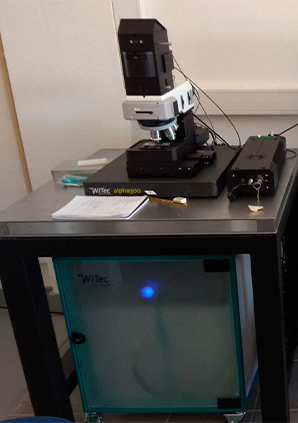
Witec MicroRaman Alpha300 R
Some key features of Witec Alpha300 R are:

* Confocal Raman Imaging with unprecedented performance in speed, sensitivity, and resolution
* Hyperspectral image generation with the information of a complete Raman spec- trum at every image pixel
* Excellent lateral resolution
* Outstanding depth resolution ideally suited for 3D image generation and depth profiles
* Ultra-fast Raman imaging option with under one millisecond integration time per spectrum
* Ultra-high throughput spectroscopic system for highest sensitivity and best per- formance in spectral resolution
* Non-destructive imaging technique: no staining of fixation of the sample re- quired
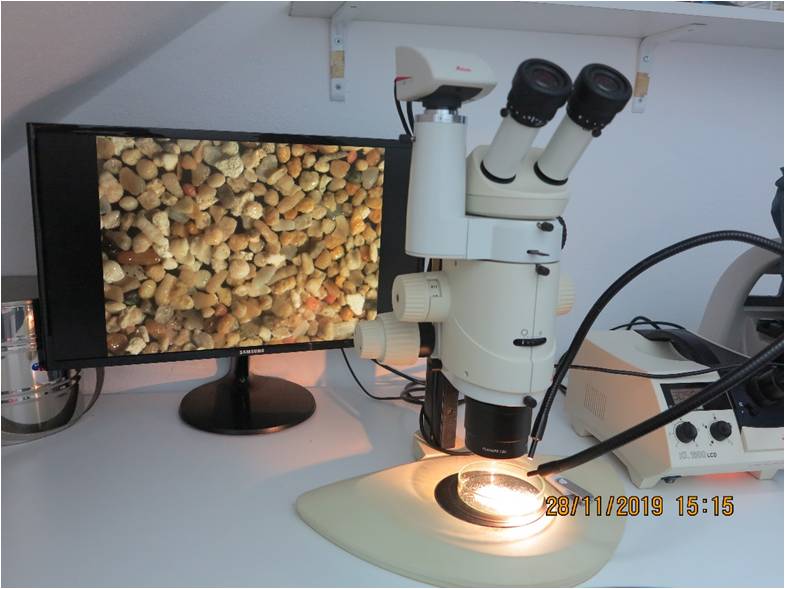
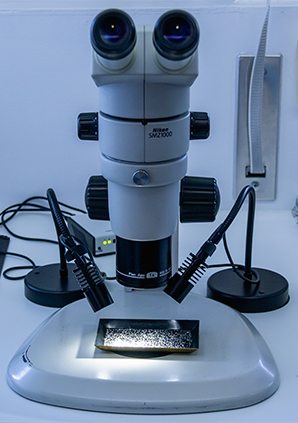
Binocular microscope
Binocular microscope setup for microorganisms observation.

STAFF LIST

Selected Publications

CONTACT US

You can contact us by filling out the form below - we will get back to you within 48 hours